Roughly 600 new beekeepers sign up for the North Carolina State Beekeepers Association's certification program each year, and most of them lose their first colony anyway. That's not a knock on the program. It's the mountain calendar. Western North Carolina doesn't play by the same rules as the Piedmont, where most beginner advice gets written. Our last frost can linger into late April at elevation, and the nectar flow in places like Asheville or Waynesville often starts weeks earlier than newcomers expect, while a cold snap on Beech Mountain can wipe out a hive that was humming in March.
So the question isn't whether you should keep bees here. It's whether your timing will match what the mountains actually do.
This guide lays out a month-by-month spring calendar for your first hive in WNC: when to order bees (hint: December, not March), when to set up your equipment, what to do the day your package arrives, and why your hive might starve in May despite fields of poppies everywhere. We'll walk through inspections, feeding decisions, swarm season, and the mistakes that sink first-year colonies. No fluff. Just the sequence, in order, with dates.
Why Starting a Beehive in North Carolina's Mountains Is Different
Pick up any generic beekeeping guide and you'll read that package bees go in around the first week of April. In Raleigh, sure. In Boone, that same date can hand your colony a dead spring. Elevation changes everything. Every 1,000 feet you climb, bloom times shift by roughly a week, so a hive in Cullowhee at 2,000 feet lives on a different calendar than one in Spruce Pine at 3,500 feet.
The state's own guidance from NC State Extension assumes Piedmont timing for feeding, splits, and swarm management. Transplant that schedule to a hollow outside Mars Hill and you'll feed too late, inspect too early, and wonder why nothing matched the book.
What actually drives the WNC season:
- Tulip poplar flow, our biggest nectar event, usually starts mid-April in Asheville but may not open until mid-May above 3,000 feet
- Wildflower flow, a longer mixed run through May and June that builds surplus honey
- Sourwood flow, the prize that makes mountain honey famous, running late June into July, roughly two weeks later at higher elevations
Here's how the same month looks at different elevations:
| Event | Asheville (~2,200 ft) | Beech Mountain (~4,600 ft) |
|---|---|---|
| Last hard freeze | early April | late May |
| Poplar bloom | mid-April | mid-May |
| First harvestable surplus | July | August, if at all |
That's the whole problem in one table.
If you want to see how a working beekeeper sequences these months, here's a solid walkthrough of the monthly calendar structure, filmed in central North Carolina. Watch the framework, then mentally push every date two to four weeks later for the mountains.
::: @iframe https://www.youtube.com/embed/b_QwvGr56rg ::-
Wait, one more thing the national guides skip. Bear fencing. Buncombe, Haywood, and Madison counties all sit in black bear country, and a 60-pound bear will flatten an unprotected hive in under a minute. You need an electric fence before the bees arrive, not after.
Then there's humidity. Mountain valleys hold moisture, and condensation dripping onto a winter cluster kills more colonies than cold itself. Ventilation matters more up here than in the flatlands.
Your Month-by-Month Timeline to Start a Beehive in Western North Carolina
Late winter is where your year actually gets decided. January through mid-February is when you order bees, because North Carolina suppliers sell out fast and the good local nucs are usually claimed by Valentine's Day. Waiting until March means accepting whatever's left, often packages shipped from Georgia that arrive stressed and behind schedule. If you're unsure where sellers are licensed, the state keeps records through Apiary Services at the NC Department of Agriculture, and the NCSBA maintains a solid guide to buying bees in North Carolina.
Order your equipment at the same time. Boxes, frames, hive tool, smoker, veil, and that electric fence. Assembly and painting take longer than you think.
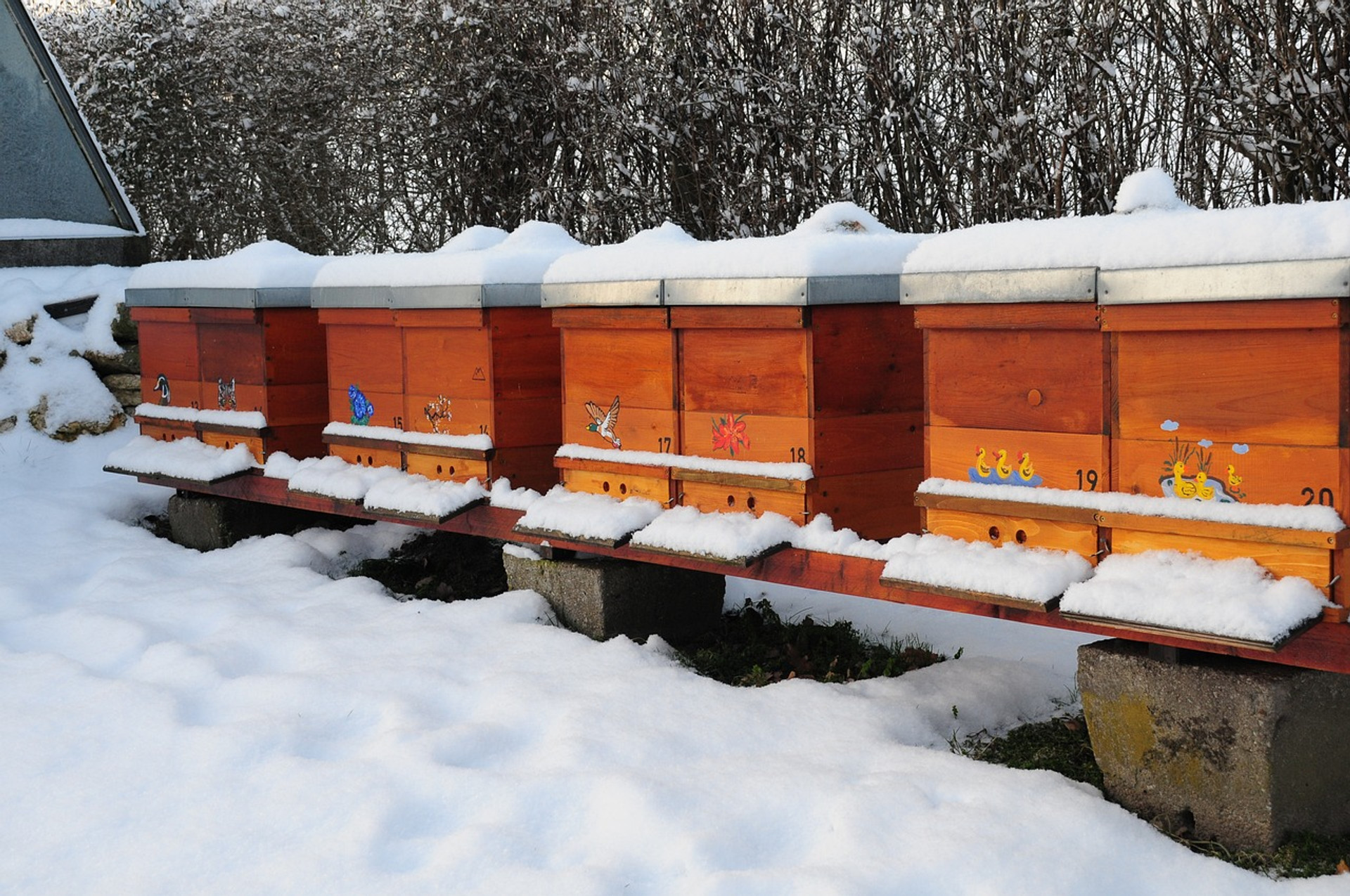
By late March, depending on elevation, you're setting up the hive stand. Pick a spot with morning sun, afternoon shade, and a windbreak on the north side. Face the entrance away from trails. Install your package or nuc once daytime temperatures hold above 60°F; in Asheville that's often early April, while folks above 3,500 feet may wait until the first week of May.
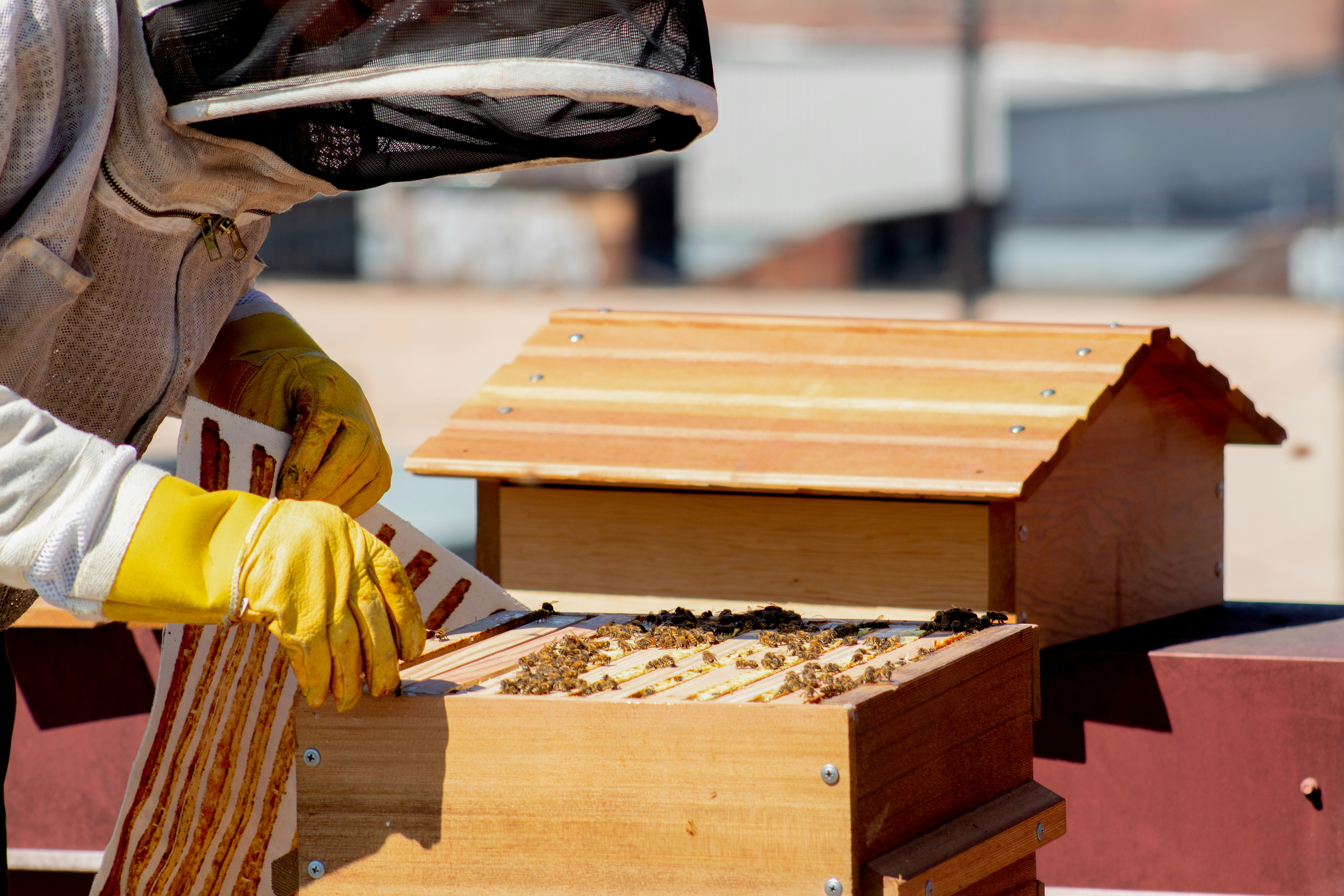
Then comes the part beginners underestimate: inspections. Check every 7 to 10 days for eggs, which confirm your queen is working. Don't over-open the hive. Every inspection costs the bees a full day of thermoregulation.
The flows arrive in sequence. Tulip poplar, then wildflower, then sourwood. Add supers before the flow, not during it, or you'll miss it. By late July the rewards of sourwood honey are real, but so is the summer dearth that follows.
Fall is mite season. Do an alcohol wash in August and again in October. Feed 2:1 syrup if stores are light. Some local groups even run hands-on workshops you can find through community beekeeping discussions. Then tilt the hive forward slightly for drainage, add a moisture board, and let them cluster. Done right, you'll start next March with survivors instead of empty boxes.
Choosing the Right Beginner Hive Kit (and Spotting What You Don't Need)
Let's settle the hive-type question first, because it shapes everything you buy afterward. For Western North Carolina, a Langstroth is the practical choice. That's what NC State's beginner guidance assumes, it's what local mentors inspect, and replacement parts are sold everywhere. Top-bar hives work in warm, dry climates; ours isn't one. Cold, wet winters and heavy spring flows punish shallow comb designs. Flow hives? They're harvesting gadgets bolted onto standard boxes, and at $700-plus they solve a problem you don't have yet.
| Hive type | Typical kit cost | WNC fit |
|---|---|---|
| Langstroth 8-frame | $250, $400 | Best; standard locally |
| Top-bar | $300, $500 | Poor winter performance |
| Flow Hive | $500, $900 | Fine hive, expensive gimmick |
A complete starter kit should include: two deep boxes, one medium super, 20, 30 assembled frames with foundation, a bottom board, an inner and outer cover, a queen excluder, a smoker, a hive tool, a bee brush, and a jacket or suit with gloves. Anything less and you'll be ordering missing pieces by April.
Overspending traps are everywhere. You don't need an electric uncapping knife, a solar wax melter, or six supers your first year. One super. Buy quality on the boxes and frames, since cheap pine from big-box kits splits within two seasons. Skimp on extras instead.
And check what comes with the kit beyond hardware. Some vendors bundle a nuc or package, and buying bees in-state means an inspection certificate. Kits that include a hands-on class, like the spring pre-orders planned at Fernhollow Apiary Supply, are worth the markup. Ask whether the seller answers phone calls in March. That matters more than a fancy box.
What Your First Year of Beekeeping Actually Costs
Let's put real numbers on this. A typical first-year setup in North Carolina runs between $700 and $1,200, and most beginners underestimate it by a couple hundred dollars.
| Item | Budget | Realistic |
|---|---|---|
| Hive kit (complete) | $250 | $400 |
| Bees | $125 (package) | $180 (nuc) |
| Protective gear | $80 | $160 |
| Tools, smoker, feeder | $60 | $100 |
| Feeding sugar (first spring) | $40 | $70 |
That's $555 to $900 before anything goes wrong.
And things go wrong. Here's what nobody puts on the checklist:
- Mite treatments. Formic Pro or Apivar runs $25 to $60 per application, and you'll likely treat twice in year one. Skip it and your hive probably won't see its second winter.
- Replacement frames and foundation. You'll break some. Budget $40.
- A second deep box by fall. If you started with a nuc in April, the colony needs room before September.
- Extracting gear. A hand crank extractor costs $150 to $300 new, or you can borrow one from a local association for a season.
Then there's fencing. Black bears are a genuine problem in Buncombe and Madison counties, and an electric fence setup runs $300 to $500. Cheaper than losing two hives, which happens every spring around here.
So what's the upside? A healthy WNC hive produces 30 to 50 pounds of surplus honey in a good year, more in an exceptional one like 2023's strong sourwood flow. Local raw wildflower honey sells for $10 to $12 per 8-ounce jar, so one harvest can offset a meaningful chunk of your setup. Registration with the state apiary program is free, by the way.
Can You Keep Bees in Your Asheville-Area Yard? Placement, Neighbors, and Rules
Probably, yes. But mountain lots change the math on hive placement, and a little planning up front saves a lot of apologizing later.
Start with sun and drainage. Face hives toward morning sun, ideally southeast, so bees warm up and fly early. Avoid low spots where cold air and water pool; damp apiaries breed chalkbrood and foul-smelling dead drones by June. Sloped ground is fine if the hive stands level side to side.
Flight paths matter more than people expect. A hive pointed at your porch means bees in your coffee. Point the entrance toward a brush line or fence so bees climb up and over head height.
Bears we've covered, but placement and fencing work together. Put hives close to the house, in sight, well inside the fence line.
- Face entrances away from neighbor walkways and play areas.
- Provide water within 20 feet: a birdbath with corks or rocks works fine.
- Work bees midday on warm, calm days; cranky weather visits make cranky bees.
Neighbors and the paperwork
The Easiest Way to Start: One Decision for Kit, Bees, and Hands-On Instruction
Most first-year beekeepers don't fail because they're lazy. They fail because they assembled five separate purchases from five different sellers and nobody told them how the pieces fit together. A hive body ordered from one catalog, frames from another, a package of bees shipped through the mail, a veil bought at a feed store, and zero instruction. That's the standard recipe.
A bundled setup removes almost every one of those failure points at once.
- One kit means no compatibility mistakes. Frames match boxes, the entrance reducer actually fits, and the veil has been tested by someone who wears it.
- Local bees beat mailed bees. Bees bought through North Carolina sellers are often already acclimated to mountain conditions, and pickup usually happens within a short drive rather than after three stressful days in a shipping box, per the NCSBA bee buying guide.
- A first inspection with an instructor changes outcomes. Seeing someone lift a frame, spot the queen, and read brood pattern teaches more than twenty YouTube videos.
Here's the honest comparison:
| Approach | Cost surprise risk | Queen/brood confusion | Support after install |
|---|---|---|---|
| Five separate purchases | High | High | None |
| Kit plus online-ordered package | Medium | Medium | Vendor emails, if any |
| Local bundle with intro class | Low | Low, because someone shows you | Direct, in person |
What the spring window actually looks like
Ready to Start Your First Mountain Beehive?
Fernhollow Apiary Supply gives Western North Carolina beekeepers mountain-tested starter kits, local-season guidance, and expert support so your first colony survives its challenging first year.
Free beginner consultation included with every starter kit order.
Frequently Asked Questions
When should I start a beehive in Western North Carolina?
Aim for mid-March through late April, once daytime highs hold above 55°F and maples start blooming. Starting earlier risks chilled brood at elevation, so Asheville-area beekeepers often wait until April 15.
How much will my first hive cost?
Budget roughly $400 to $650. That covers a basic Langstroth kit, protective gear, a smoker, and one package or nuc of bees, which runs $130 to $180 locally.
Do I need a permit or registration?
Yes. North Carolina requires you to register your hive with the NCDA&CS within 30 days of getting bees. It's free, and inspection services can help with disease issues.
How much honey will I harvest the first year?
Honestly? Probably none. A new colony spends its first season drawing comb and storing winter stores, and robbing them in autumn can kill the bees. Most mountain beekeepers pull their first real surplus, often 20 to 40 pounds, in year two.
Sources
- How to Become a Beekeeper in North Carolina, # How to Become a Beekeeper in North Carolina
Introduction
What's more, it’s a hobby that can eventually make you money! The following is a primer on how to start your first hive and begin keeping bees.
Getting educated
Before you get into beekeeping, it's critical that you first understand what you'll be getting yourself into. There are any number of ways by which you can get educated on the basic of beekeeping, ranging from self-study to formal courses. Fortunately in North Carolina, there is a wide array of options available to get up to speed before you purchase your first hive.
Beehive Equipment
A colony of bees can live very successfully in such a hive and can store enough honey for its own needs. They may quickly out grow this space, however, and produce a swarm (where approximately half of the bees will fly away to start a new colony). To keep the bees from swarming, and to harvest their surplus honey, you will likely need additional hive equipment. But if you don’t want to collect honey, then a starter hive is all the equipment you will ever need.
Most beekeepers are not content with watching half of their bees fly away, and so they will try to prevent this from happening by furnishing more hive space in the form of additional boxes, called ‘ _supers,_’ on top of the original box. This gives the colony more space to grow and the bees more room to store honey. If you wish to remove honey from the hive, adding supers is a necessity.
_We recommend that a first-time beekeeper start with two full beehives._ _That way, you will have a minimal frame of reference to compare your new colonies and to develop your management techniques._
In addition to furnishing a beehive, you will also need some other equipment. There are three items that are required to safely work a beehive: a _smoker_ (to pacify the bees and reduce their defense response), a _hive tool_ (to pry apart hive equipment and frames), and a _veil_ (to protect the head and face). Beginners often feel more comfortable with the extra protection of a full-body beekeeping _suit_ and _gloves_, but eventually they are not necessary if the bees are handled properly.
Figure 1. Basic hive equipment.
Getting Started
Equipment is available from any one of several beekeeping supply companies (listed below) and may be purchased in a variety of ways. Most companies have ‘starter kits’, which usually include a complete starter hive (without bees), smoker, hive tool, and veil ( Figure 2 and Figure 3). There are also ‘deluxe kits,’ which include the previously mentioned items, as well as additional equipment to add to the hive as the colony population grows. The prices of these kits range from about $300 for the starter hive to about $600 for a deluxe kit. You can also buy the individual (pre-cut) parts of the hive and assemble it yourself (listed in Table 1).
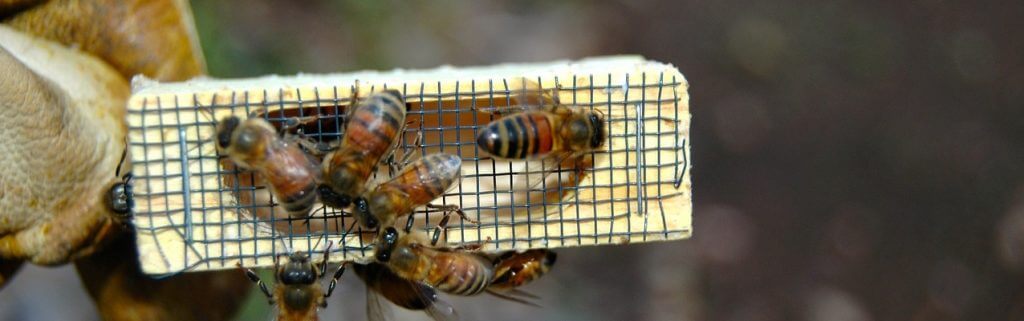
Once a hive is assembled, it is ready to house bees. There are three main ways to acquire a living honey bee colony. First, you may purchase a five-frame ‘nucleus’ colony (or “nuc box”) from a local beekeeper who is registered to sell bees (contact the NC Department of Agriculture & Consumer Services for a current listing; see below). A nuc box usually contains five frames of 10,000 adult bees, wax comb (with honey and pollen), brood (developing young), and an egg-laying queen. Starting a colony this way can cost between $150-200, but it will become a mature hive very rapidly and be less likely to fail. Second, you may purchase a three-pound ‘package’ of bees with a queen. Any number of beekeeping operations nationwide will send through the mail a screened wooden box with live bees, costing $100-125. The bees can then be shaken out of the package, and they will establish themselves in the hive. Third, you can capture a swarm that has escaped from another hive. Although not as common as they once were, wild swarms can be obtained in the early to mid-spring (late March, April, and early May). These latter two approaches are more cost effective (virtually free in the latter case), but the bees will need more time for the colony to develop and become productive.
Of course, honey bees have the potential to sting in defense of their hive. The frequency of being stung, however, is much lower than what is commonly believed. If managed properly, using smoke, a hive tool, protective clothing, and gentle manipulation, stings are quite unlikely.
| Individual Hive Item | Approximate Price (or range of prices) | Description/Purpose |
|---|---|---|
| Bottom board | $20.00 | Hive body sits on this and acts as the floor of the hive. |
| Hive body | $17.00-20.00 | Standard size is 9 5/8 deep. Holds 10 full-size frames. Also called a deep super. |
| 10 deep frames | $18.50-$42.50 | Full-size frames used by the bees to construct their wax comb. |
| 10 wax sheets | $16.50-$150.00 | Foundation used by the bees for building their honey comb. |
| Inner cover | $12.00 | Thin board between top box and outer cover. Helps with ventilation. |
| Outer cover | $15.00-$25.00 | Covers the top of the hive. Provides shelter from the elements. |
| Smoker | $40.00-$50.00 | Used before opening a hive to help calm the bees and make them less likely to sting. |
| Hive tool | $6.50-$10.00 | Used to pry apart pieces of the hive that have been stuck together with 'bee glue' or propolis. |
| Veil | $25.00-50.00 | Covers the head and face of beekeeper to prevent stings to these sensitive areas. |
| TOTAL | $170.50-$379.50 | |
| Additional Items | ||
| Entrance reducers | $2.00 | Minimizes amount of entrance space the bees need to guard and minimizes the flow of cold air in winter. |
| Queen excluder | $12.00-$20.00 | Placed below the honey supers to prevent queen from laying eggs in the honey comb. |
| Feeder | $5.00-$25.00 | During times of food scarcity, bees may need to be fed sugar water. There are several types of feeders available. |
| Supers (assembled with frames) | $55.00-$75.00 | Any box placed on top of the hive body to give the colony more room. Honey supers are used for producing honey. |
Table 1. List of individual components of a beehive, with the approximately price and description of each.

Figure 2. An assembled 'starter' hive.
Figure 3.
Resources
Contact information
_North Carolina State Beekeepers Association_
Most of these chapters meet monthly with instructional programs, and many clubs offer new beekeeper classes each year. If you would like some hands-on experience before you start your own hives, offer to help a beekeeper in your area when they are working with their bees.
_North Carolina Department of Agriculture and Consumer Services, Apiary Inspection_
Department of Agriculture & Consumer Services (NCDA&CS).
_North Carolina State University Apiculture Program_
The Apiculture Program at NC State University has been a leader in honey bee research, outreach, and instruction. Cooperative Extension agent.
- How to Buy or Sell Bees in North Carolina, NCSBA, - Skip to primary navigation
- Skip to main content
- Skip to primary sidebar
- Skip to footer
For Buyers
What should buyers and sellers expect in a nuc?
NC State Apiary authorization ensures that those selling bees in North Carolina are selling disease-free stock of known origin. Check with the North Carolina Department of Agriculture Apiary Division for details and a list of those permitted to sell bees in North Carolina.
Check with your local chapter.
For Sellers
It is unlawful to market queens, packages, nucs, or hives before the Permit to Sell Bees in North Carolina has been issued.
- The sale of less than 10 bee hives in a calendar year
- The movement of bees to gather honey
Parties interested in selling larger amounts of honey bees in the State of North Carolina must submit the following forms to the N.C.
Unsigned forms cannot be processed.
Brood and bees on comb carry a higher intrinsic/potential risk of transferring honey pathogens and pests.
September 16, 2026
Footer
Notifications
- How to start a bee hive in North Carolina? - Facebook, Melt some beeswax and paint it on the interior, inside the lid, walls, frames. Save the water from the melted wax, put it in a spray bottle and ...What are the best practices for a beginner to start beekeeping in ...What are some tips for starting a bee colony in North Carolina? - FacebookMore results from www.facebook.com
- Plant Industry - Apiary Services - NC Department of Agriculture, Search
On top of that, the Apiary Program provides educational workshops to educate the state's beekeepers on the biology and treatment of mite and disease pests of honey bees and Africanized bees. Promotional effects are achieved through lectures to county and state beekeeping organizations or any other groups that are interested in apiculture or related topics.

_Honey Display at the State Fair_
The Apiary Program is also responsible for the bee and honey display at the North Carolina State Fair in Raleigh and the Western Carolina State Fair in Asheville.
The Apiary Program in cooperation with the Food and Drug Protection Division of the North Carolina Department of Agriculture and Consumer Services provides honey house sanitation inspections.
- How to Sell Bees in North Carolina
- N.C. Bee and Honey Act of 1977
- Honey and Bee Industry Regulations
- Beekeeping, Tracheal Mite Disease, and Varroa Mite Disease
For Additional Information Contact:
Phone: (919) 218-3310; FAX : (919) 233-8394
On This Page Jump Links
Off
A2A
- How To Start Beekeeping in 2026 - YouTube, ## How To Start Beekeeping in 2026 | Simple Steps for New Beekeepers
Black Mountain Honey 333,337 views 2y ago
Copy link
Info
Shopping

•
You're signed out
To avoid this, cancel and sign in to YouTube on your computer.
CancelConfirm
Up next
Live
Upcoming
CancelPlay Now
Honey recipes over a wood fire: four autumn favourites\ \ 23:41
Buy 14 Day Beekeeper
blackmoun…ney.co.uk
if
Hide
Share
Include playlist
Please try again later.
0:00
0:00 / 32:06
Live
•Watch full video
• Education and research
•
12:17\ How To Transfer A Nuc Into A Beehive - A Simple Guide For A Smooth And Successful Colony MoveBlack Mountain Honey42K • 4y agoLivePlaylist ()Mix (50+) 33:02\ Don't Waste Your First Hives on These Mistakes - Rookie Beekeeper Mistakes #1-13 Beekeeping 101Ray Hewitt - Honey Top Bees23K • 4mo agoLivePlaylist ()Mix (50+) 35:08\ Knew Nothing About Bees and Now Makes $20K/Month. HOW?!UpFlip132K • 4w agoLivePlaylist ()Mix (50+) 6:06\ splitting our hive part 2kevin milne19 • 2d agoLivePlaylist ()Mix (50+) 41:58\ How to set up your first beehive.Ryan Grady74K • 2y agoLivePlaylist ()Mix (50+) 14:54\ Preparing Colonies For Winter with Greg RogersBob Binnie18K • 9d agoLivePlaylist ()Mix (50+) 8:50\ 15 Old Beekeeping Tricks Grandma Never Wrote DownLuke Beiller5.9K • 1mo agoLivePlaylist ()Mix (50+) 55:54\ Beekeeping | How To Make $1,000 From One HiveDavid Burns11K • Streamed 4d agoLivePlaylist ()Mix (50+) 34:28\ How to Make Money Beekeeping - Wisdom from a 50 Year Commercial Beekeeper!Bee Love Beekeeping10K • 11mo agoLivePlaylist ()Mix (50+) 1:08:33\ New to Flow Hive beekeeping? Here is how to get startedFlow Hive61K • Streamed 2y agoLivePlaylist ()Mix (50+) 1:03:36\ How to prevent your hive from swarmingFlow Hive15K • Streamed 3y agoLivePlaylist ()Mix (50+) 26:44\ I Insulated the Wrong Part of My Hive for Years (Bees Don't Heat the Box)Traditional Beekeeping17K • 2mo agoLivePlaylist ()Mix (50+)

Black Mountain Honey
99.6K subscribers
Join
Subscribe
Subscribed
6.6K
Share
Download
Download
Save
333K views2y ago1 product
333,337 views • Jan 13, 2024 • 1 product
How To Start Beekeeping
Join 14 Day Beekeeper HERE - [https://www.blackmountainhoney.co.uk/...](https://www.youtube.com/redirect?event=video_description&redir_token=QUZZTVljRS15YnNOVTVlNlpMVm04SmdvU01JVHxBSTVJdTV0S1QySGhfQW01d3VJaF90ZGJPS3FwRlpKWHkyTHltbjRaNFJfZTdaSUtjMVlTRVlmUmZQRm1EWnh5VjN0dTh6c2U3UjdtQWVnemlsUi1ySVlxSFZISDJuNG4yZW12&q=https%3A%2F%2Fwww.blackmountainhoney.co.uk%2Fproduct-page%2F14-day-beekeeper-online-training&v=on-xmXuSwv8)…more
more
Black Mountain Honey tagged products below.Learn more
14 Day Beekeeper
Unavailable
Black Mountain Honey
learning.blackmountainhoney.co.uk/checkout/14dbk
Shop
Black Mountain Honey
How this was made
Auto-dubbed
Audio tracks for some languages were automatically generated. Learn more
Education and research Education and research \ \ 0:00
0:00
Finding a mentor Finding a mentor \ \ 1:00
1:00
The role of patience The role of patience \ \ 2:09
2:09
Hive location and layout Hive location and layout \ \ 3:41
3:41
6:06
11:31
Acquiring your first bees Acquiring your first bees \ \ 13:01
13:01
Hive setup and forage Hive setup and forage \ \ 15:46
15:46
Black Mountain Honey
How To Start Beekeeping in 2026 | Simple Steps for New Beekeepers
Black Mountain Honey
Black Mountain Honey
6.6KLikes
333KViews
2024Jan 13
Black Mountain Honey tagged products below.Learn more
14 Day Beekeeper
Unavailable
Black Mountain Honey
learning.blackmountainhoney.co.uk/checkout/14dbk
Shop
Black Mountain Honey
How To Start Beekeeping
Join 14 Day Beekeeper HERE - [https://www.blackmountainhoney.co.uk/...](https://www.youtube.com/redirect?event=video_description&redir_token=QUZZTVljSHJ1MERvM2pjMllvYl9zdXZVM1RzNXxBSTVJdTV0TVBldEp0LUtkTFd4dk9KSllLYjBXOUktMmRQLVFpQjVUWkIwNDFBWnVKckFFc3JKNjN6WXBkSDMxNjJxQzhxN0t2YXZGR1pGV0tZTnFVb0dnQmdZSVBvdlduNzRz&q=https%3A%2F%2Fwww.blackmountainhoney.co.uk%2Fproduct-page%2F14-day-beekeeper-online-training&v=on-xmXuSwv8)
🌼 Chapter 1: Understanding the Basics Get ready to dive into the fascinating world of bees! We'll cover the different types of bees, their roles within the hive, and the importance of beekeeping for both local ecosystems and agriculture. Understanding the basics is important before you start your own hive, so grab a notebook and let's get started!
Before you bring your bees home, you'll need to assemble the necessary equipment. From bee suits to smokers, we've got you covered with recommendations and tips on where to find the best equipment.
🏡 Chapter 3: Choosing the Right Location The success of your beekeeping venture depends on selecting the perfect location for your hive. We'll also cover local regulations and guidelines to ensure you're in compliance with beekeeping laws.
🌻 Chapter 4: Setting Up Your Hive Now that you have your equipment and the perfect location, it's time to set up your hive! We'll discuss hive designs, frames, and the essential elements that provide a comfortable home for your bees.
🐝 Chapter 5: Introducing Your Bees The big day has arrived, it's time to introduce your bees to their new home! Learn how to transfer them into the hive and observe their initial behaviors as they acclimate to their surroundings.
📋 Chapter 6: Beehive Management Beekeeping requires regular maintenance and monitoring. We'll cover common issues you may encounter and provide solutions to keep your hive thriving throughout the seasons.
🌺 Chapter 7: Harvesting Honey One of the most rewarding aspects of beekeeping is harvesting your own honey. Learn the proper techniques for extracting honey without harming the hive.
🌿 Chapter 8: Sustainability and Conservation Beekeeping goes hand in hand with sustainability and conservation efforts. Explore eco-friendly practices that benefit both your bees and the environment.
👩🌾 Chapter 9: Troubleshooting and FAQs Feel confident in handling potential setbacks and ensuring the long-term success of your hive.
Connect with fellow beekeepers, share experiences, and stay informed by becoming part of the beekeeping community. We'll guide you on how to find local beekeeping associations, online forums, and educational resources to deepen your knowledge and passion for beekeeping.
You will learn how to choose the right hive, where to position it, how to prepare your apiary and how to select calm and reliable bees suited to beginners.
If you want structured and simple beekeeping training that you can access anytime you need it, you can join 14 Day Beekeeper. It gives you step by step guidance across the whole beekeeping year and is designed to give you confidence at the hive. Start here: [https://www.blackmountainhoney.co.uk/...](https://www.youtube.com/redirect?event=video_description&redir_token=QUZZTVljRkVCdmNjc3dnTDVBTW9iNkxOcGdMSXxBSTVJdTV0TUpPN2xwSDBvbGVrNGhoSUhvWGczZVBpcnJaM0tVYkRsZ2MteFNQb20xTU5qQ3JUM3p5a1JzOWp4Q3BIMHUtRHRIdEdudFVIVGhUa0dhcEVwZm92dFFOTlBkQU1r&q=https%3A%2F%2Fwww.blackmountainhoney.co.uk%2Fproduct-page%2F14-day-beekeeper-online-training&v=on-xmXuSwv8)…...more
...more Show less
How this was made
Auto-dubbed
Audio tracks for some languages were automatically generated. Learn more
Education and research Education and research \ \ 0:00
0:00
Finding a mentor Finding a mentor \ \ 1:00
1:00
The role of patience The role of patience \ \ 2:09
2:09
Hive location and layout Hive location and layout \ \ 3:41
3:41
Black Mountain Honey
Video details
Don't Waste Your First Hives on These Mistakes - Rookie Beekeeper Mistakes #1-13 Beekeeping 101
Ray Hewitt - Honey Top Bees
23K4mo ago

Beekeeping | How To Make $1,000 From One Hive
David Burns
11KStreamed 4d ago

New to Flow Hive beekeeping? Here is how to get started
Flow Hive
61KStreamed 2y ago

$320 vs $140 vs $63, I Tested 3 Beehives for 2 Years and the Results Surprised Me
Mae Holloway
16K5mo ago

$41K/Month Selling Honey from His Garden?!
UpFlip
1.8M2y ago

How to Start a Bee Hive in 7 Steps - Mann Lake Bee & Ag Supply Skip to Main Content
The #1 Choice of Professional Beekeepers
FREE SHIPPING ON MOST ORDERS $150+
Catalog Contact Us Store Locator
Starting a bee colony for the first time may be stressful and confusing, but Mann Lake is here to help new beekeepers. From setting up to understanding honey bees, let’s equip you with everything you need to start your colony with confidence.
1. Determine the Location of Your Apiary
This entails more considerations than you might think.
Conduct a careful study of your proposed site beforehand to ensure it’s safe for the bees.
2. Determine How Many Colonies You Need
Make sure that you pre-order your honey bees early!
3. Order Equipment Ahead of Time
This ensures that you’re ready when your bees arrive.
Learning the proper operations of each hive tool is also essential. This helps avoid any misuse that could potentially harm your bees.
4. Setup the Hive Before Bees Arrive
After your bees and equipment are ordered, get ready to set up your hives in your apiary. Make sure that the hives are set up prior to the bees’ arrival.
Be more prepared by surrounding your honey bee hive with a windbreak like a fence or hedging.
Common Mistakes to Avoid When Starting Your Bee Hive
Ready to Buzz: Sealing Success in Beekeeping
Starting a bee hive demands care and a keen eye for detail. The bee colony’s health and honey yield rest on the beekeepers’ willingness to learn and adapt. So, begin this journey with readiness, follow the right steps, and understand the common pitfalls. Soon enough, the sweet reward of honey and the pride of a healthy, bustling colony will be yours.

Bella